
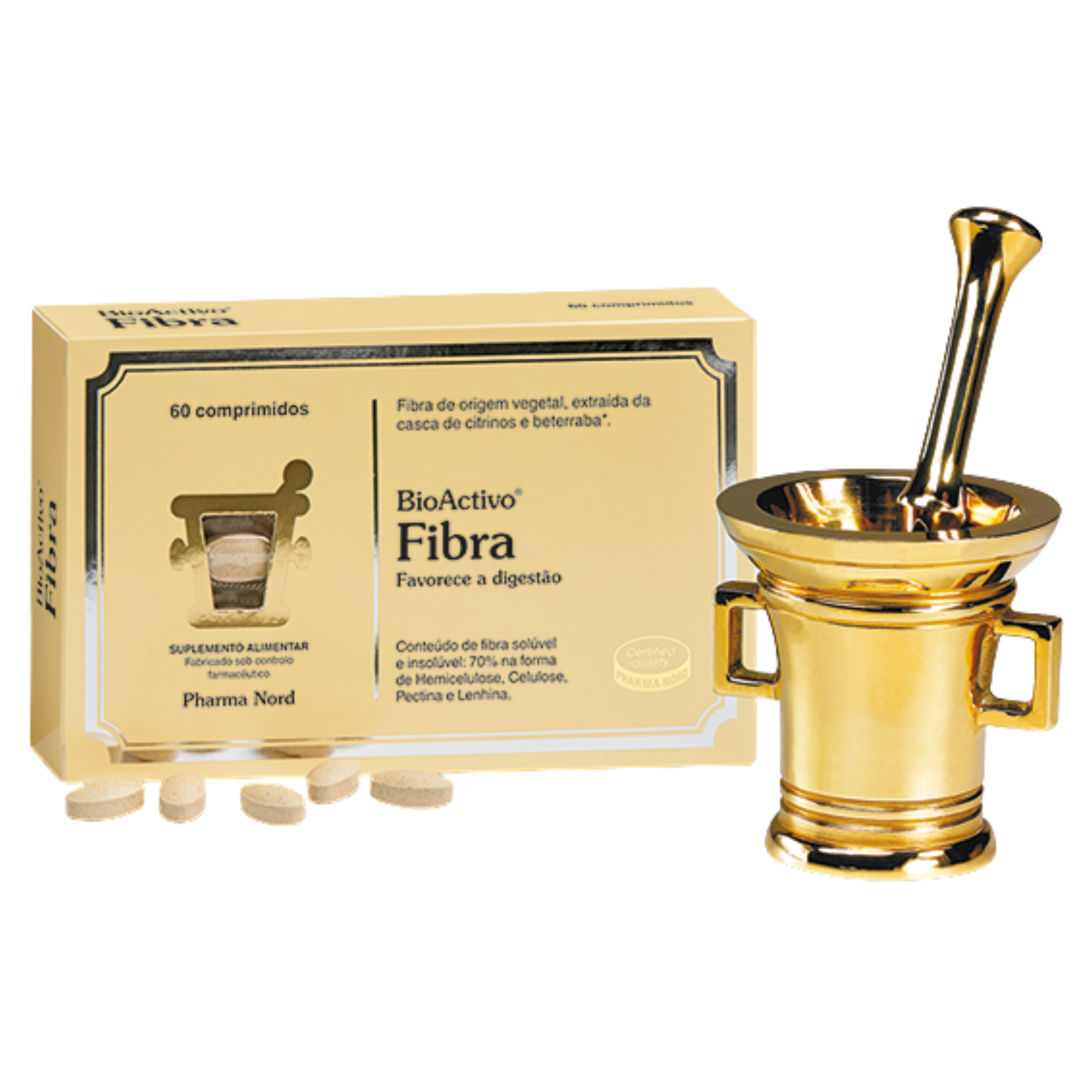
BioActivo Fiber 60 tabs - Pharma Nord
BioActivo Fiber 60 tabs - Pharma Nord Available in stock
Em Stock - 1 unidade disponível
Free Shipping on orders over 30€ (Portugal Continental)
Description
Description
BioActive Fiber 60tabs - Pharma Nord
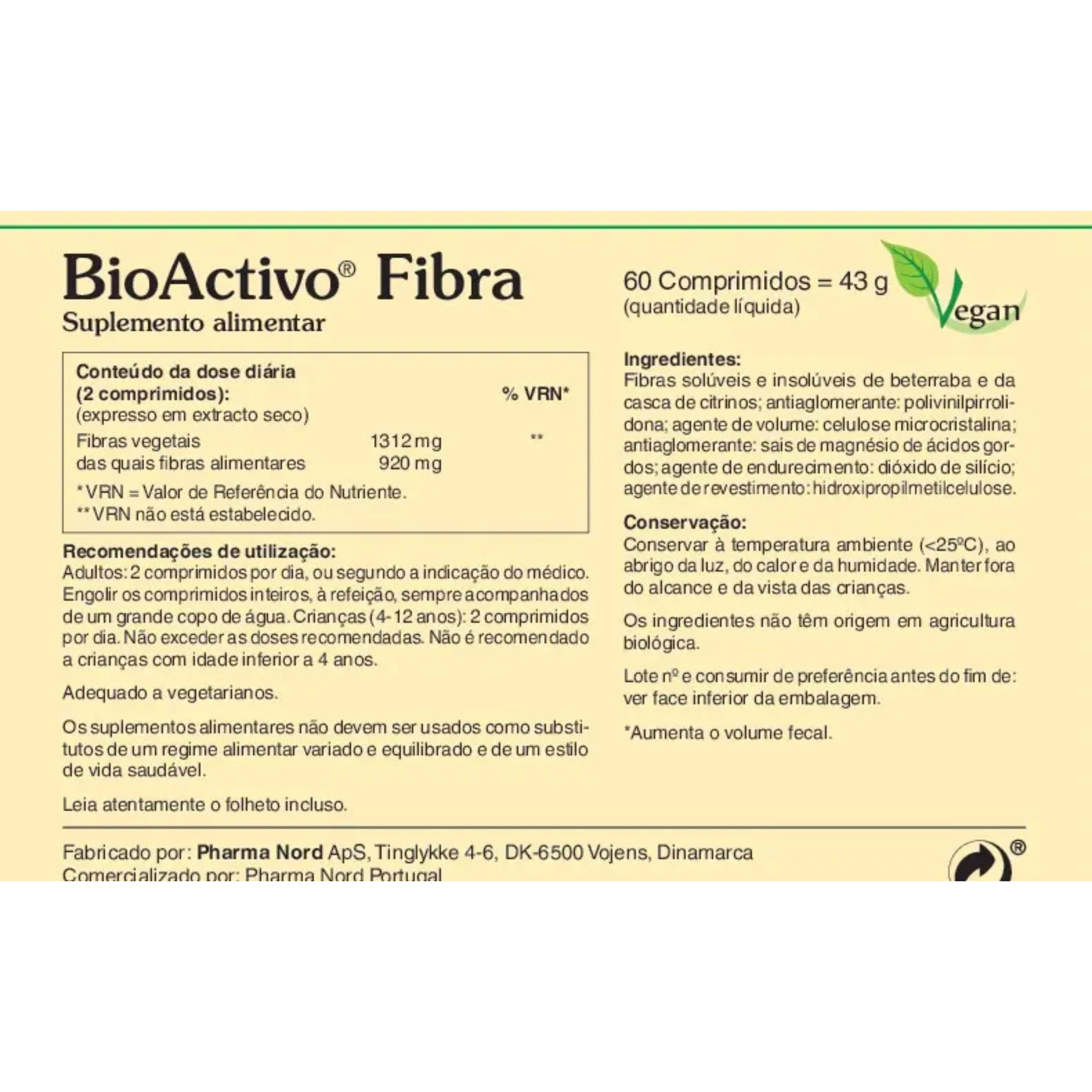
BioActive Fiber from Pharma Nord is a food supplement that contains, in each tablet, a balanced mixture of 460 mg of natural vegetable fibers, both soluble and insoluble, derived from lemon peel and beetroot, which compensate for the low fiber content of modern diets. BioActive Fiber is beneficial for the digestive system, helping the body eliminate waste while contributing to regular and effective bowel movements.
What are dietary fibers?
Dietary fibers are naturally found in many raw foods. They belong to the group of carbohydrates that we cannot digest or can only digest to a certain extent, meaning they are broken down into sugars and starch by digestive enzymes.
Soluble fibers
There are two main groups of dietary fiber: soluble and insoluble types. Soluble fibers turn into a gelatinous mass when mixed with liquids and can absorb up to 15 times their own weight. Diets that include this type of fiber increase intestinal content and slow down the passage of food through the digestive tract.
Insoluble fibers
Insoluble fiber can also absorb some water, but not as much. This type of fiber reduces the time that food remains in the intestine and, like soluble fibers, will add bulk to the intestinal content. Diets that include this type of fiber increase intestinal content and slow down the passage of food through the digestive tract.
Fiber and intestinal flora
A normal intestine contains about 1 kg, and in some people up to 2 kg, of intestinal bacteria (about 160 different species). These intestinal bacteria break down the proteins and hard-to-digest carbohydrates in our diet, depending on a certain amount of fibrous substances from food. The food we eat is important for the quantity and distribution of the different bacterial species.
In addition to processing fiber compounds from food, these gut bacteria excrete different neurotransmitters that affect metabolism, appetite regulation, and immune defense through lymphoid cells in the intestinal mucosa.
European consumption habits
European diets have changed substantially since a century ago. About 100 years ago, our diet consisted of cereals with high fiber content, as well as fruits and vegetables. The fiber content in meals has decreased with the increase in industrial food refining, causing a massive drop in daily fiber intake.
What are the different types of fiber?
Cellulose is a carbohydrate that humans cannot digest because we do not produce enzymes to break it down. Cellulose is found in the cell walls of plants. Fruits and vegetables are good food sources of cellulose. Cellulose absorbs only a small amount of liquid. Natural fibers from beetroot and lemon peel
Hemicellulose is also a carbohydrate that cannot be digested, just like cellulose. Together with pectin, it forms a matrix that surrounds the cellulose fibers in the plant cell wall.
Pectin is a dietary fiber that cannot be digested and is found in most plant cell walls. The pectin content in green fruit is predominantly insoluble, becoming increasingly water-soluble as the fruit ripens due to the action of enzymes. Pectin is used to make, for example, jelly.
Lignin is not considered a carbohydrate but belongs to another group of substances. The lignin content present in plant cell walls varies. Lignin provides resistance to plants and is not digested by humans.
Package contains 60 tablets.
Specifications
Specifications
-
Nutritional information
-
Warnings
-
Dosage and administration
-
Features
-
Ingredients


